83% of companies start modernising - only 35% succeed. Here’s why.
Modernisation requires more than relocation; it requires rethinking how applications are structured, deployed, and operated.



Most organisations start modernising. Very few do it well.
In our ModAX whitepaper, we shared a key statistic that reveals the reality of the modernisation struggle many organisations are facing.
According to IDC, of the 85% of businesses that have started to transform their infrastructure, only 35% believe their approach is actually effective. That gap is telling, not because modernisation is inherently difficult, but because it’s often approached in the wrong way.
In practice, the same patterns show up again and again. What starts as a well-intentioned move to the cloud gradually turns into something slower, more complex, and harder to scale than expected.
So where does it go wrong?
Lift-and-shift solves the wrong problem
For many organisations, modernisation begins with lift-and-shift.
It’s an understandable choice. It’s fast, relatively low risk, and allows teams to move to the cloud without major disruption. But while it changes where applications run, it doesn’t change how they run.
That distinction matters.
Lift-and-shift carries forward the same architectural constraints, operational overhead, and inefficiencies that existed before. Over time, those issues become more visible:
- Applications remain difficult to change
- Costs increase without a corresponding improvement in efficiency
- Teams continue to manage infrastructure rather than build new capabilities
Organisations reach the cloud, but not the outcomes they expected from it.
Modernisation requires more than relocation; it requires rethinking how applications are structured, deployed, and operated.
Complexity builds faster than value
Even when organisations move beyond lift-and-shift, another issue often takes its place: complexity.
Modern cloud environments can quickly become fragmented. Different teams adopt different tools, processes evolve independently, and platforms grow without a clear structure.
At the same time, technical debt continues to accumulate. Decisions made to move quickly, shortcuts in architecture, and workarounds in code start to slow things down.
The combination creates friction across the delivery lifecycle:
- Higher-risk, slow releases
- Heightened costs and maintenance
- Increased bug rates and security failures
- Decreased team morale
- Less business agility
The effect isn’t always immediate, but it compounds over time. More effort is required just to maintain momentum, and less progress is made as a result.
Steamhaus is a trusted AWS Partner specialising in cloud native and application modernisation. Using our expertise, we help businesses achieve their cloud ambitions and build a data-driven, future-proof strategy to drive long-term efficiency and practicality. Learn more about how we do it.
The missing piece is usually a platform strategy
Underneath these issues is a more fundamental gap.
Many organisations are modernising without a clear platform strategy.
Instead of building a consistent foundation, they evolve their environments incrementally: adding tools, services, and processes as needed. Over time, this creates a “patchwork” platform:
- Inconsistent environments across development and production
- Duplicated tooling and capabilities
- Unclear ownership and operating models
- Rising cost without clear optimisation paths
This becomes a limiting factor, particularly as organisations look to scale newer capabilities like AI.
AI workloads place additional demands on platforms, from access to high-quality data, to scalable compute to the ability to experiment and deploy quickly. Without a consistent, well-defined platform, those capabilities are difficult to support.
This is often the point where organisations realise that modernisation hasn’t gone far enough.
How organisations actually modernise successfully
By this point, the pattern is usually clear.
Modernisation doesn’t stall because teams lack capability. It stalls because there’s no clear path from where they are today to where they need to be.
The organisations that succeed take a different approach.
They don’t treat modernisation as a large, one-off transformation. They break it down into structured, outcome-led steps, focusing on delivering value early, then scaling.
That’s the thinking behind ModAx.
A more practical path to modernisation
ModAx is designed to move teams out of planning and into delivery, quickly.
Instead of long discovery phases and high-risk transformation programmes, it focuses on building momentum early.
In practice, that looks like:
Week 1: Assess and align
Identify where modernisation will deliver the most value. Define a clear target architecture.
Weeks 2-6: Build and deliver
Stand up a working platform or modernised workload. Prioritise what actually moves the needle.
Beyond: Scale with confidence
Extend the approach across other applications and teams, with a clear pattern to follow.
This approach reduces risk and avoids the common trap of “analysis without progress”.
Turning modernisation into delivery
Frameworks matter. But execution matters more.
The biggest shift we see in successful organisations is this: They move from planning modernisation to delivering it in small, controlled steps.
That’s where Steamhaus works best. We work alongside engineering teams to:
- Identify where modernisation will have the biggest impact
- Simplify complex platforms and reduce unnecessary overhead
- Deliver modern, scalable foundations aligned to AWS best practices
The focus is always the same: less time planning, more time delivering. If you're looking to start your modernisation journey - our team is always happy to help you make a headstart.
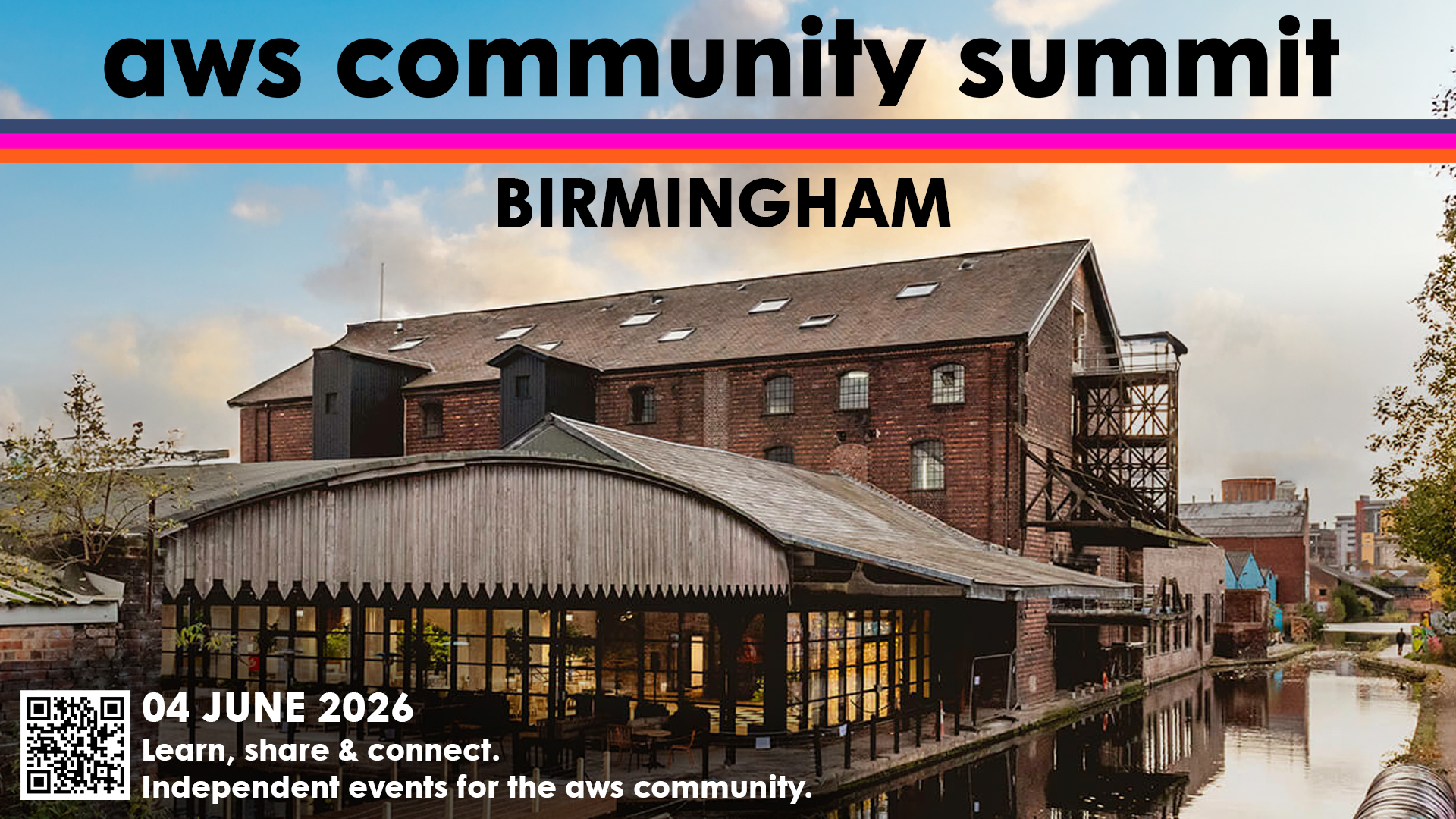
Join the conversation at AWS Community Summit Birmingham
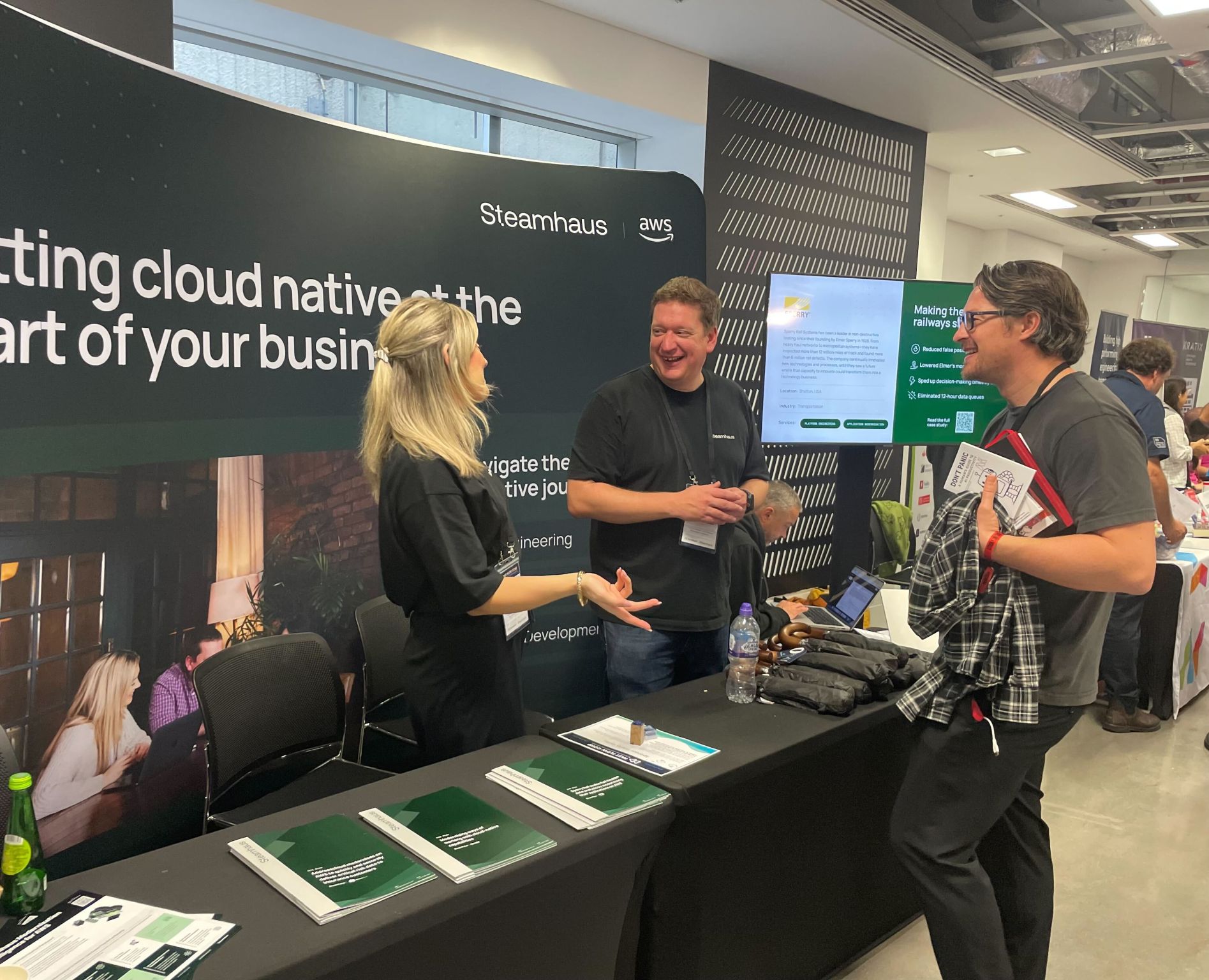
Many organisations are now facing the same challenge: How do we move from partial modernisation to something that actually delivers? The AWS Community Summit is bringing together platform leaders to discuss how organisations are modernising platforms to support AI, and we're proudly sponsoring the event. Join us on the day and check out the agenda to see what's in store.

.jpg)

-min.jpg)



.webp)
.webp)










.webp)