Why most AI initiatives stall before they start
The biggest barrier to AI adoption is not the models - it’s the platform underneath them.



Almost every business wants to innovate using AI. But many businesses struggle to take AI initiatives from the planning stage to actual execution. For those who do make some progress, it’s then a challenge of maintaining momentum and ensuring the results achieved are the ones expected.
Most stalled AI initiatives aren’t down to a lack of tooling. Often, it’s down to weak foundations, critical data gaps, ill-planned deployments, or organisational pressures. This blog covers some of the most common challenges businesses face, and how to address them to help ensure AI initiatives run successfully and deliver measurable results.
The AI ambition gap
Organisations don’t lack AI ambition, they lack the foundations to deliver on it. With competition ramping up, budgets and expectations increasing, AI is no longer a ‘nice to have’. It’s a board-level priority.
But delivery hasn’t kept pace, most organisations are stuck in a familiar pattern:
- Proofs of concept that never reach production
- Models that can’t be operationalised
- Data pipelines that don’t scale
- Teams blocked by infrastructure and process
The gap is not capability, it’s environment. AI workloads place very different demands on platforms compared to traditional applications. They require:
- Rapid iteration and experimentation
- Access to large volumes of clean, governed data
- Scalable compute on demand
- The ability to deploy and monitor continuously
Most platforms weren’t built for this.
Why legacy architectures slow delivery
Legacy architectures are one of the most common reasons most organisations find themselves stuck in the experimentation phase with AI. In fact, 95% of IT leaders pinpoint legacy systems as their main blocker to scaling with AI.
Legacy architectures generally pose multiple issues when it comes to modernisation. In the context of AI innovation, they create structural failures that prevent initiatives from moving from pilot to production stage. The stability, predictability, and batch processing legacy systems are designed for conflicts with AI’s requirements for agility, presenting:
- Real-time limitations: AI models depend on timely, high-quality data. Legacy data platforms often can’t provide this, with data locked in silos or delayed through batch processing.
- Data bottlenecks: Fragmented, on-premises ‘data prisons’ prevent a unified, 360-degree view that could be useful, but are not accessible, to AI engines.
- Rigid monolithic architectures: Tightly coupled, complex and hard-coded, legacy systems mean smaller changes require more testing and operational effort.
- Environment inconsistency: Differences between development, testing and production environments lead to unpredictable model behaviour.
- Operational overhead: Teams spend more time maintaining systems than delivering new capabilities.
With these issues, AI becomes an isolated experiment instead of a strategic tool. Businesses miss out on measurable ROI, and are hindered by an ‘agentic gap’ between AI potential and legacy limitations.
The hidden cost of platform complexity
Even organisations that have moved to the cloud often face a different problem; complexity.
Multiple tools, fragmented platforms, and inconsistent processes create friction across the delivery lifecycle.
Research from GitLab shows developers spend as little as 25% of their time writing code, with the majority lost to operational overhead and process.
In AI initiatives, this friction compounds.
It shows up as:
- Slower experimentation – spinning up environments takes days or weeks, and teams rely on central platforms or DevOps teams.
- Bottlenecks and dependencies – engineers can’t self-serve infrastructure. Data access is slow or restricted.
- Inconsistent and unreliable platforms – differences between dev, staging, and production. Models behave unpredictably.
- Increased operational overhead – teams spend more time managing tools and less building value. Efforts are duplicated across teams.
- Talent frustration and attrition – engineers are blocked by progress, not capability. High performers then leave for better environments
The hidden cost is not just financial, it’s lost time, slower delivery, and missed opportunities.
In practice, this means:
- Experiments take longer to run
- Models take longer to deploy
- Insights take longer to reach the business
AI doesn’t fail because teams lack capability. It fails because the platform introduces too much friction.
Before organisations can scale AI, they need to simplify the platforms those initiatives depend on.
Why platform engineering is the real AI enabler
If it’s not more tooling that’s required, then what do teams need to succeed in delivering AI initiatives start-to-finish? They need a system that makes the tooling they already have usable, scalable and consistent.
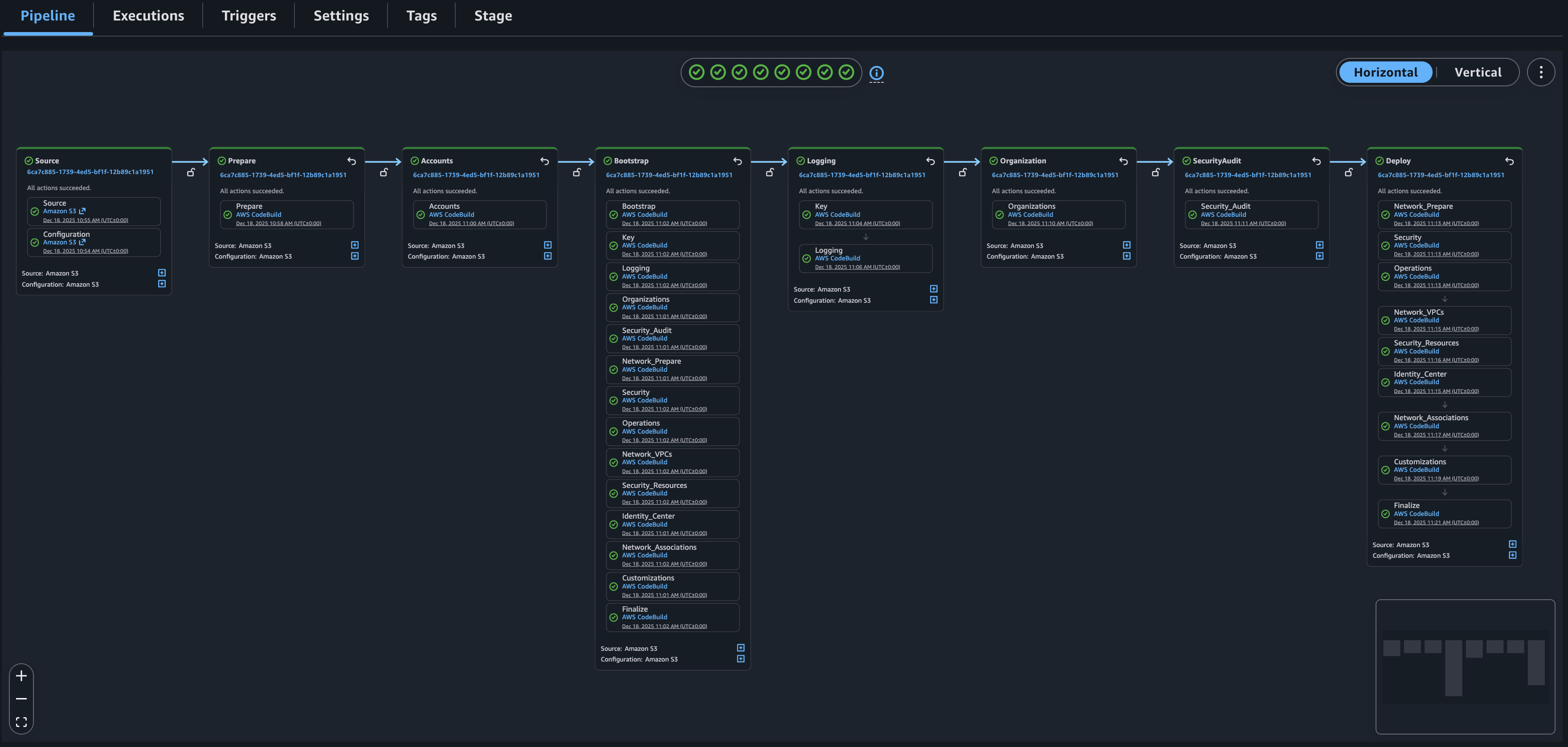
Platform engineering is about creating internal platforms that developers and data teams alike can use, providing self-service access, and standardising processes. It turns complex cloud environments into simple, repeatable processes for your teams.
In practice, this means:
- Developers and data teams can provision infrastructure on demand
- Environments are consistent across development and production
- Deployment pipelines are automated and repeatable
- Security and compliance are built into the platform
This removes the common bottlenecks:
- No waiting on central teams
- No manual setup
- No inconsistent environments
Teams can move faster because the platform supports them, rather than slowing them down.
Platform engineering isn’t a supporting function, it’s the foundation that makes AI delivery possible at scale. Instead of expecting teams to navigate complex, fragmented environments, it provides a consistent, self-service platform that simplifies how applications and models are built, deployed, and managed.
What modern AI-ready platforms look like
Modern AI-ready platforms are designed for speed, consistency, and scale. They enable teams to provision environments on demand, access governed data without friction, and deploy through automated, standardised pipelines. Security and compliance are built in, not bolted on, and systems are fully observable, enabling continuous improvement.
The impact is significant. What was once slow, manual, and fragmented becomes fast, repeatable, and reliable, allowing organisations to move from isolated experiments to AI capabilities that deliver real business value.
Join the conversation at the AWS Community Summit Birmingham
Many organisations are facing the same challenge: How do we move from AI experimentation to real delivery? The AWS Community Summit is bringing together platform leaders to discuss how organisations are modernising platforms to support AI, and we're proudly sponsoring the event. Join us on the day and check out the agenda to see what's in store.


.jpg)


-min.jpg)






.webp)
.webp)














.webp)