Your GenAI pilot worked. Is your platform ready for what comes next?
Why GenAI pilots stall before production, and how targeted platform engineering, Amazon EKS or managed AWS services can help get them live.



A GenAI proof of concept can often be built quickly by a small team using a limited dataset and a controlled environment. With fewer users and dependencies, the team can focus on proving that the idea works and has value.
Production introduces requirements the pilot may not have covered. The application must work with live data and existing systems, meet security controls, respond to changes in demand and be deployed consistently. Teams also need to monitor performance and cost, support the application and know who owns it after launch.
Your existing platform may already meet many of these requirements. Moving into production means checking where it is ready and where further work is needed
This article covers the platform and operational requirements involved in moving GenAI into production, including where Amazon EKS fits and when a simpler approach may be more suitable.
A successful pilot can still stall before production
A proof of concept may rely on manually created infrastructure, selected data and close support from the engineers who built it. These arrangements can work well for a trial but become difficult to repeat as more users, data sources and systems are added.
Production GenAI usually requires:
- Controlled environments for experimentation
- Consistent testing and deployment
- Secure access to approved data
- Computing capacity that can respond to demand
- Monitoring of performance, usage and cost
- Clear responsibility for supporting the service
If these requirements are addressed too late, a promising use case can be delayed, cost more than expected or add to the operational work already carried by engineering teams.
Manual processes often cause the most friction. An engineer creates an environment because the standard process takes too long. A team develops its own deployment method because the existing one does not fit. Access to data depends on knowing the right person.
Each workaround solves an immediate problem, but it becomes harder to manage as more teams and applications become involved. Identifying this friction early helps the organisation make targeted improvements before it slows production delivery.
Where EKS fits, and where it does not
For organisations already using containers, Amazon EKS can provide a consistent foundation for GenAI applications that need the control, portability and scaling capabilities of Kubernetes.
EKS does not, however, define how developers request environments, release changes, manage access or monitor applications. It also does not decide who responds to incidents or supports the service. Those processes need to be designed around it.
Without them, Kubernetes can add more work for developers. Teams may have to manage clusters, deployment files, networking rules and additional operational responsibilities alongside building the application.
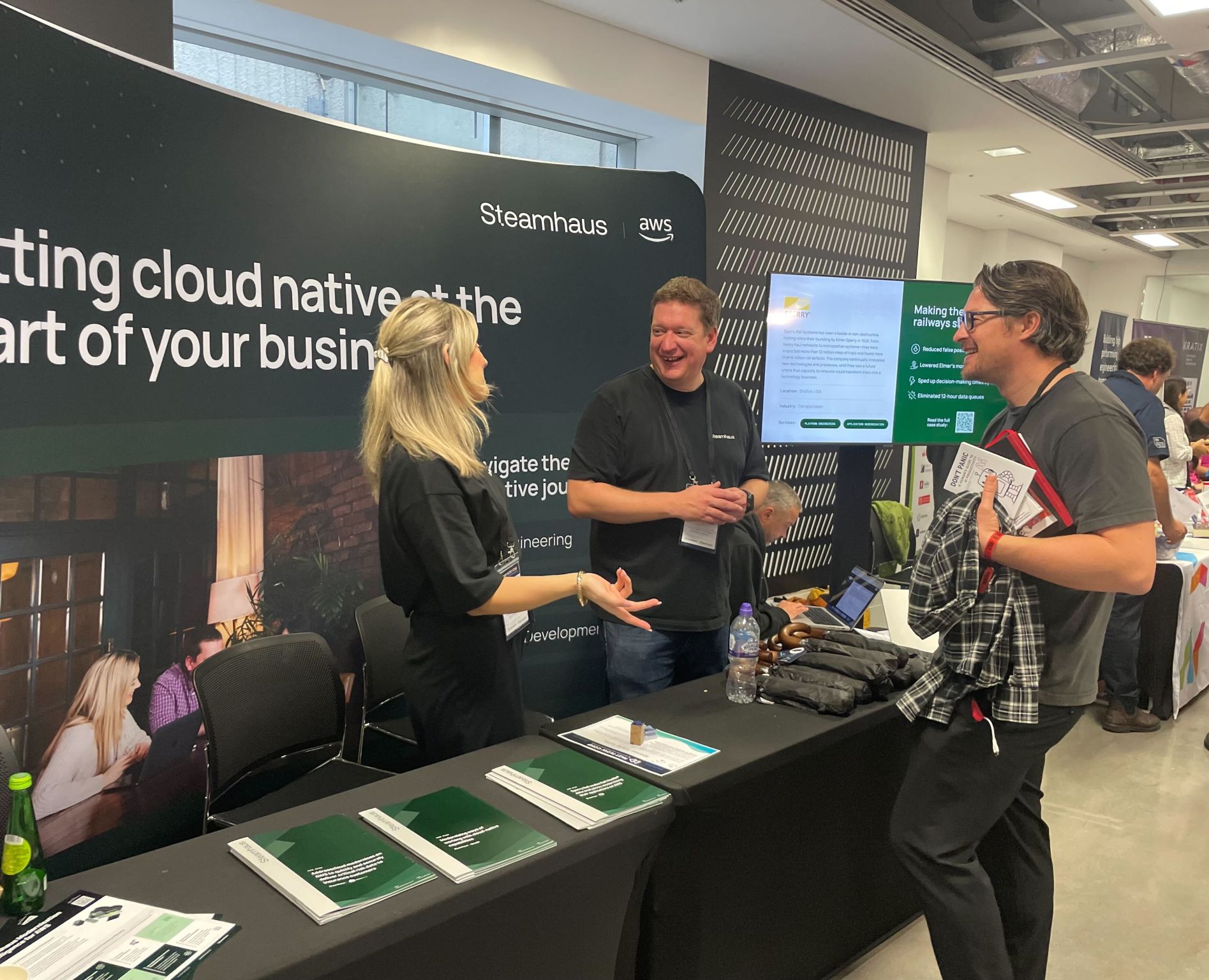
Steamhaus saw this with Thredd. Moving applications to EKS was one part of a wider programme that included infrastructure as code, GitOps, automated delivery, security controls and real-time observability. Together, these changes reduced configuration drift and the manual work required from engineering teams.
Whether a GenAI application belongs on EKS depends on the workload and the team’s ability to operate Kubernetes effectively. Some applications need the control it provides. Others can be delivered more simply through managed AWS services.
The next AI use case should not start from scratch
Once one AI application is in production, other teams should be able to reuse the processes and controls already established. They should not have to work out how to create environments, access data, deploy software and support the service each time.
Platform engineering can provide clear, repeatable processes for these tasks. This can help teams:
- Create approved environments without lengthy requests
- Reuse deployment patterns across applications
- Access data through agreed controls
- Scale computing capacity without losing cost visibility
- Include security and monitoring from the beginning
- Establish clear ownership for production services
Teams can choose the architecture that suits their application while reusing established deployment processes and operational controls.
Focus modernisation where it is needed
Moving GenAI into production does not have to begin with a complete platform transformation. Existing capabilities may already support much of the application.
Start by identifying where progress is slowing. The problem may be access to data, environment creation, inconsistent deployment, limited cost visibility or a lack of operational capacity. Each points to a different improvement.
Steamhaus used this targeted approach with Sperry Rail, rebuilding an AI proof of concept as a scalable application while improving the data and platform capabilities around it. The solution combined serverless services, containers and a shared data layer rather than applying one architecture to every part of the application.
The same principle applies elsewhere: identify what is preventing the use case from reaching production, then make the specific platform, data or operational changes needed to move it forward.
How Steamhaus can help
If you’re not sure what is holding your GenAI use case back, our AWS-funded AI Readiness Assessment is a good place to start. Over 2–4 weeks, our senior consultants work with your business and technology leaders to find the AI use cases worth doing first, check that your data is ready for them and plan the route to production.
You get a prioritised roadmap, an AWS architecture recommendation and a business case you can take straight to your leadership team. The assessment is fully funded by AWS for eligible organisations.
Once the plan is ready, our engineers can help you deliver it, from the data and platform foundations through to the production build - register interest for the assessment here.